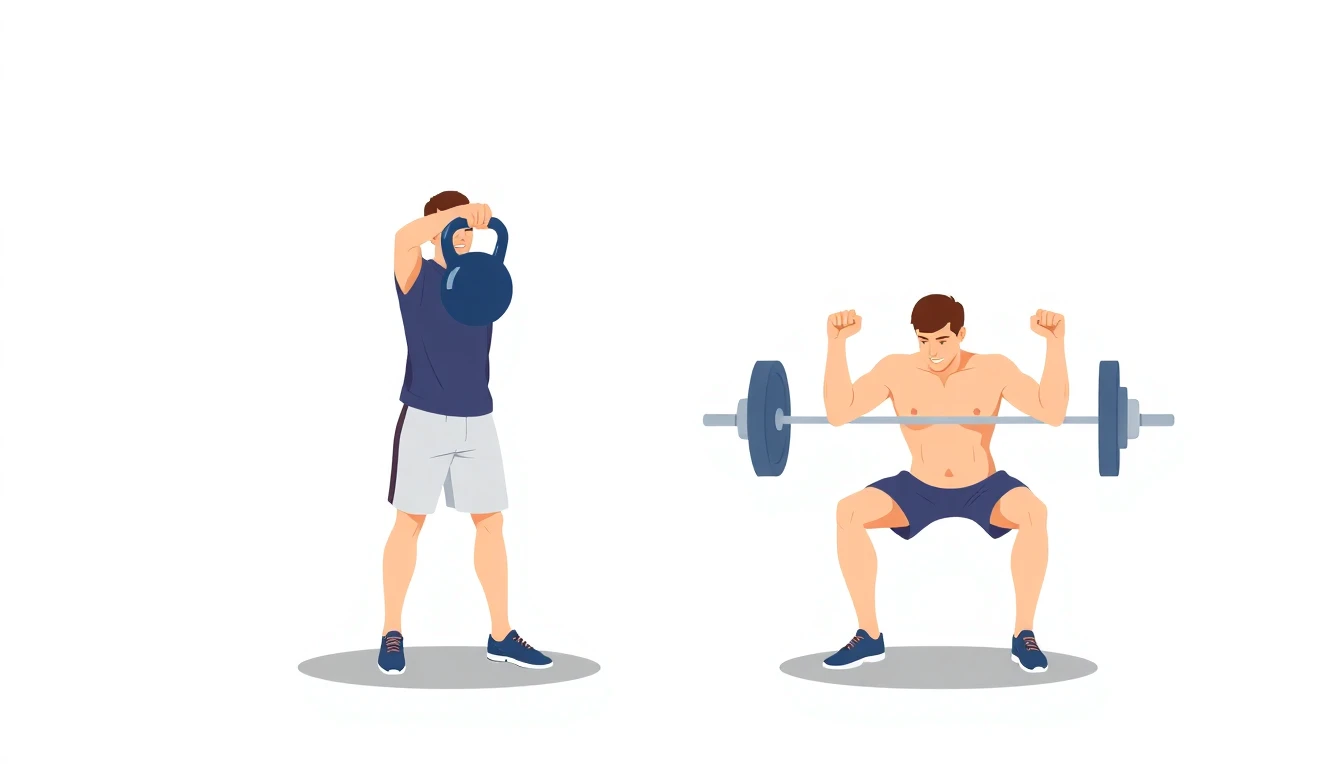
When weight management is appropriate, the goal should be more than a smaller number on the scale. Everyday strength, mobility and a routine you can maintain matter too. Resistance exercise and adequate nutrition belong in that discussion, but neither a workout nor a supplement guarantees that all weight lost will be fat.
For adults, general education only. This is not a personalised training or nutrition plan and has not been independently medically reviewed. Pregnancy, frailty, an eating-disorder history, recent surgery and medical conditions can require a different approach.
Why include strength work during weight management?
Body weight includes fat, muscle, bone, water and other tissues. A falling scale reading does not reveal which components changed. Strength work gives muscles a reason to remain active and capable; it is not simply a way to chase a calorie-burn number. WHO guidance identifies muscle strengthening as beneficial and emphasises that all physical activity counts.
NICE recommends helping adults increase activity even when it does not produce weight loss, because activity has other health benefits. Walking and resistance exercise are complementary rather than competing options. Explore the strength-training guide alongside the walking and everyday-movement guide.
Build around ability, not exhaustion
Choose movements, equipment and a setting suited to your circumstances. Illustrative options include getting up from a stable chair, a supported pushing movement or a resistance-band pull, but these are not suitable for every person. Ask a qualified professional to help select and adapt exercises if pain, disability, balance problems or illness affect your ability.
Start with a manageable amount and leave room for recovery. Learn controlled technique before increasing difficulty. Do not treat severe soreness, breathlessness or exhaustion as proof that a session worked. If a task becomes comfortably repeatable, gradual progression may be appropriate; there is no universal starting load or number of repetitions for all readers.
| Priority | Useful question | Avoid |
|---|---|---|
| Technique | Can I control the movement comfortably? | Copying an advanced workout without adaptation |
| Consistency | Can I repeat this routine next week? | Punishing workouts followed by long gaps |
| Recovery | Am I recovering and functioning normally? | Ignoring worsening pain or persistent fatigue |
Do not let a deficit crowd out nutrition
NICE advises that dietary approaches for weight management should be flexible, individualised and nutritionally balanced. A more restrictive plan is not automatically a better plan. Include suitable protein-containing foods as part of varied meals, such as pulses, eggs, fish, dairy or alternatives appropriate to your preferences and health needs. This article does not prescribe a protein target: kidney disease and other circumstances may change appropriate advice.
Use the meal-planning guide for practical ideas. The macro planner can illustrate estimates, but its numbers are not a personalised prescription. Specialist-supported low-energy diets should not be turned into unsupervised long-term routines.
Measure more than body weight
Keep simple notes on activity consistency, everyday tasks, comfort and recovery. An improvement in carrying groceries or getting up from a chair may matter even when weight changes slowly. A home scale or photograph cannot reliably establish that muscle has been preserved.
Seek individual advice if strength declines, eating becomes restrictive or distressing, or fatigue persists. Stop exercise and seek urgent help for chest pain, fainting or severe unexpected breathlessness. Do not use this article to decide whether a medical symptom is harmless.
Sources and limits
Sources checked on 10 November 2026. This is a practical summary of guidance, not a systematic review or a claim that a particular routine guarantees muscle preservation.